
Abstract Submission
Please fill in the appropriate details for Abstract Submission.
Call for abstracts
Abstracts are now invited. If you wish to submit an abstract for consideration by the Organising Committee, you must also intend to register for the conference. Online submission is the only accepted method of abstract submission. The deadline for abstract submission is Monday, 1 August 2026 (Saturday)
Topics for Abstract Submission
We invite submissions across the following thematic areas in Forensic Psychiatry and allied disciplines. Submissions may be made as Oral Presentations, Posters, Papers, Symposia, or Workshops
Dear Presenters,
Greetings from the Forensic Psychiatry 2026 organizing team! We are delighted to have you contribute to this prestigious international gathering. To ensure the highest academic standard and a seamless experience, please adhere to the following guidelines for your presentations.
General Instructions
Arrival: Please arrive at your designated hall 15 minutes prior to the start of your session.
Support: Hall managers, student volunteers, and technical staff will be available in every room to assist with AV requirements.
Moderation: Session Chairs will introduce speakers and strictly moderate the Q&A sessions to keep the program on schedule.
Certificates: * Digital certificates (e-Certificates) will be issued to registered attendees.
Presentation Certificates will be issued only to the presenting author.
Awards: Prizes for Best Oral Presentation and Best ePoster will be announced during the Closing Ceremony.
International Forensic Psychiatry Conference 2026
The deadline for abstract submission is Monday 1 August 2026 (Saturday).
Abstract submission closes: 1 August 2026 (Saturday)
Notification to authors: 17 August 2026 (Monday)
Author acceptance of offer deadline: 24 August 2026 (Monday)
Abstract submission key dates
Please note:
All abstracts must be prepared according to the guidelines provided. Incomplete or incorrect submissions will be returned to the author and must be re-submitted immediately in the correct format to be considered for inclusion in the program.Abstract submission will close at 23:59 Indian Standard Time on 1 August 2026 (Saturday)
Abstract speaker registration
The invitation to submit an abstract does not constitute an offer to pay travel, accommodation or registration costs associated with the conference. Similarly, no presenter fee is paid to successful participants. All presenters must register for the conference in order for the presentation to be included in the program.
Symposia & Workshop Guidelines
Duration: Each session is strictly 60 minutes.
Symposia Structure: We recommend 15 minutes per presenter, followed by a 15-minute moderated discussion with the audience.
Workshops: These should be interactive. Ensure any hand-outs or digital materials are prepared in advance.
Technical: * Format: Microsoft PowerPoint (.pptx) or PDF.
Fonts: Use standard professional fonts (Arial, Calibri, Times New Roman).
Offline Media: If your case study or forensic analysis includes video/audio, ensure they are embedded for offline use, as high-speed internet cannot be guaranteed in all session halls.
Oral Presentation Guidelines
Time Limit: 10 minutes total (8 minutes for presentation + 2 minutes for Q&A).
Slide Count: We recommend a maximum of 8–10 slides to ensure clarity.
Equipment: You must use the provided hall laptop. Personal laptops are not permitted to avoid connection delays.
Mandatory Disclosure: All presenters must include a Conflict of Interest (COI) disclosure slide at the beginning of their presentation.
Submission: You will receive a unique upload link via email. Please upload your final slides at least 48 hours before the conference.
Poster Presentation Guidelines
Instead of a digital upload, presenters are required to bring a physical printed poster to the venue. Please follow these specifications to ensure your poster fits the provided display boards.
1. Technical Specifications
Poster Size: Standard A0 Size is recommended.
Width: 84.1 cm (33.1 inches)
Height: 118.9 cm (46.8 inches)
Orientation: Portrait (Vertical).
Note: Most physical poster boards are tall/narrow. If you use Landscape, it may overlap into the next presenter's space.
Material: We recommend printing on high-quality matte paper or "wrinkle-free" fabric for easier travel. Avoid heavy gloss which can cause glare under hall lights.
Legibility: * Title: Should be readable from 5–6 feet away (Font size 72pt+).
Body Text: Should be at least 24pt font size.
2. Layout & Content
Mandatory Sections: Title, Authors & Affiliations, Introduction, Methods, Results (with tables/graphs), Discussion/Conclusion, and Conflict of Interest Disclosure.
QR Codes: You are encouraged to include a QR code in the bottom corner linking to your full paper, contact details, or supplementary data.
Visuals: Use high-resolution images (300 dpi). Avoid long paragraphs; use bullet points for better readability.
3. On-Site Instructions
Board Allocation: Each presenter will be assigned a Poster Board Number (e.g., PP-042). Please check the final program or the registration desk for your number.
Mounting: The organizing committee will provide adhesive tape, pins, or "Velcro" dots. Do not use permanent glue or nails on the boards.
Installation Time: Posters must be mounted during the morning break on the day of your assigned session.
Presentation: Presenters must stand by their poster during the Designated Poster Walk (times will be listed in the final schedule) to answer questions from the judges and delegates.
Removal: It is the responsibility of the author to remove the poster at the end of the day. Posters left behind will be disposed of by the venue staff.
Pro-Tip for International Travelers: Many forensic psychiatrists now use fabric posters that can be folded into a suitcase, avoiding the need for bulky poster tubes during flights.
Forensic Child & Adolescent Psychiatry
· Juvenile justice & mental health
· Child abuse & forensic evaluation
· Internet-related offences & minors
· School violence & risk assessment
· Capacity & consent in minors
Digital & Emerging Forensic Psychiatry
· Digital phenotyping
· Cybercrime & online behaviour
· AI in risk assessment
· Tele-forensic psychiatry
· Data privacy & ethics
Cultural & Global Psychiatry
· Cultural perspectives in forensic psychiatry
· Migration, refugees & legal psychiatry
· Indigenous & community mental health
· Global mental health systems comparison
Clinical & Therapeutic Aspects
· Pharmacological management
· Psychotherapy in offenders
· Aggression & impulse control
· Personality disorders
· Neuropsychiatry & forensic relevance
Education, Training & Capacity Building
· Training models in forensic psychiatry
· Simulation-based learning
· Curriculum development
· Tele-education & digital learning
Research & Methodology
· Quantitative & qualitative research
· Validation of assessment tools
· Cross-cultural psychiatry research
· Systematic reviews & meta-analyses
· Implementation science
Case-Based & Practice-Oriented
· Complex medico-legal case discussions
· Unique or rare forensic presentations
· Lessons from clinical practice
· Documentation & certification challenges
Core Forensic Psychiatry
· Criminal responsibility & insanity defence
· Fitness to stand trial / competency
· Risk assessment (violence, recidivism)
· Forensic report writing
· Malingering & deception assessment
Law, Ethics & Policy
· Mental Healthcare Act (India)
· Comparative international forensic laws
· Capacity assessment
· Ethical dilemmas in forensic psychiatry
· Human rights & mental illness
Correctional & Prison Psychiatry
· Mental healthcare in prisons
· Substance use & dual diagnosis
· Suicide prevention in custody
· Rehabilitation & reintegration
· Telepsychiatry in prisons
Submission Topics
About Forensic Psychiatry
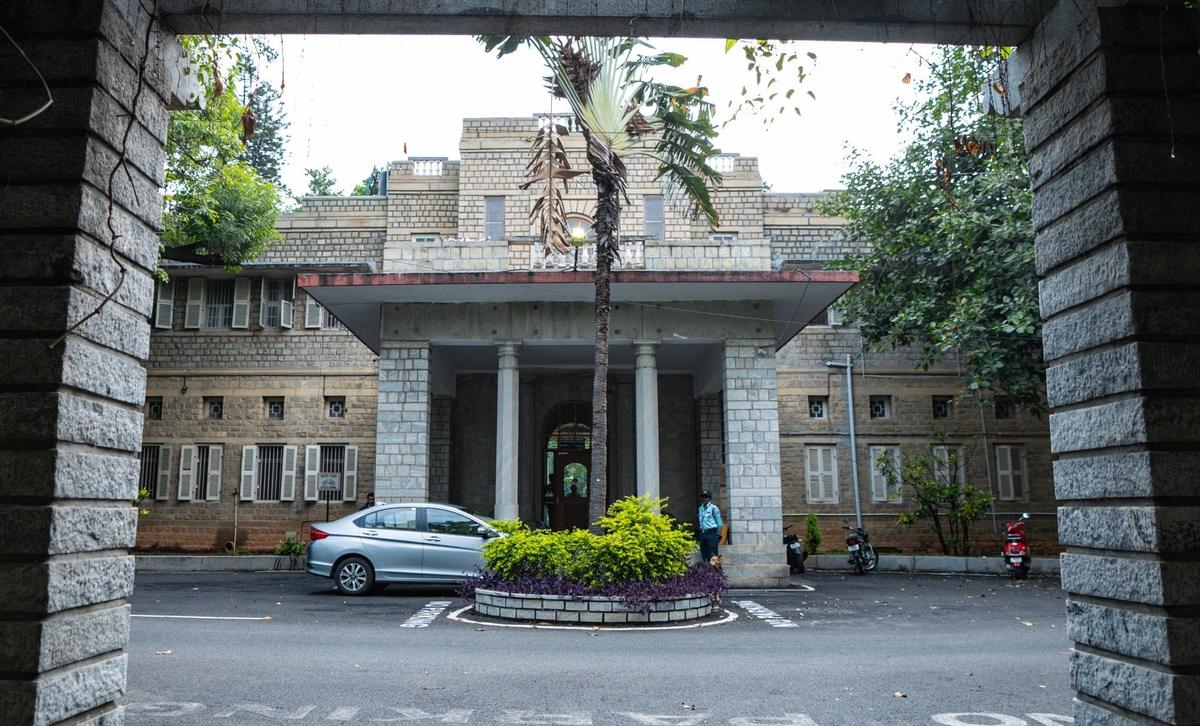
The International Forensic Psychiatry Conference 2026, hosted by NIMHANS Bangalore and RANZCP Australia, brings together experts worldwide.


Our Mission
Get Inspired
We aim to foster collaboration between forensic psychiatrists and mental health professionals to advance research and practice globally.
Contact
© 2026. All rights reserved. International Forensic Psychiatry Conferencee