
International Forensic Psychiatry Conference 2026
Bringing together experts in forensic psychiatry from around the world to share knowledge and advance the field. To know about RANZCP visit the wesite
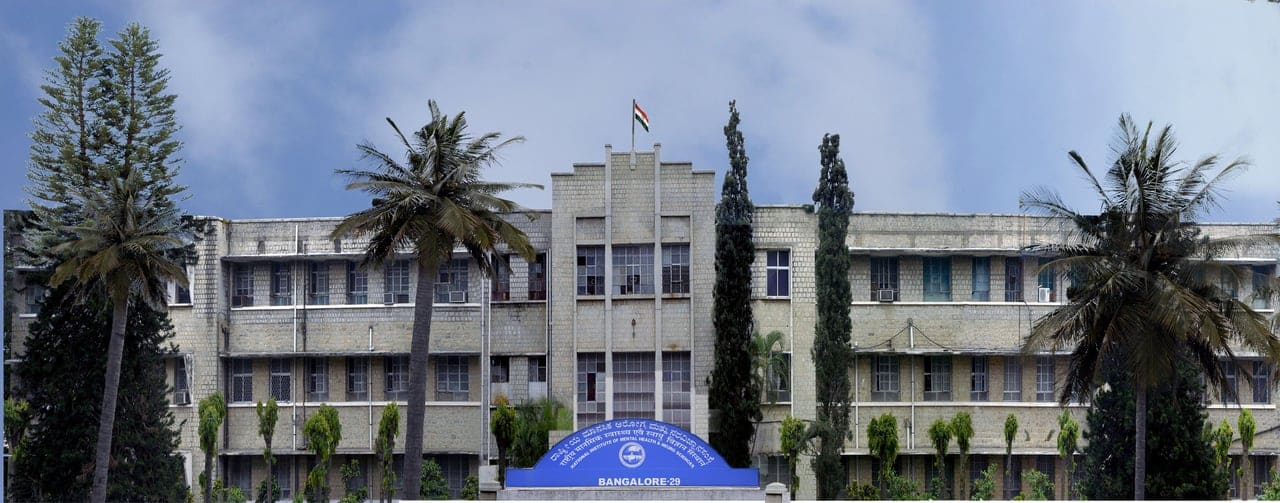
The history of mental health care in Karnataka dates back to the colonial period. Following the fall of Tipu Sultan in the late 18th century, Bengaluru became an important British military and administrative centre within the princely state of Mysore. Between 1831 and 1881, under British Commissioner Sir Mark Cubbon, Western medicine was introduced and hospitals and dispensaries were established for soldiers and civilians.
The Bangalore Lunatic Asylum was founded in 1847, largely through the efforts of Dr. Charles Irving Smith, a British medical practitioner. The 50-bed asylum, located at Pete (Pettah) near the Dharmambudi tank (present-day State Bank of Mysore Head Office area), was designed as an open and airy facility. Patients were encouraged to move freely and engage in activities such as gardening, rope-making, and domestic work. Over time, doctors from the Indian Medical Service were appointed, and by 1914, nearly 100 patients were admitted and discharged annually.
In 1925, the institution was renamed the Mental Hospital, reflecting a shift in the approach to mental health care. The old Avenue Road facility was closed in 1936–37, and the hospital was relocated to Lakkasandra, with over 100 acres of land donated by the Maharaja of Mysore. Dr. Frank Xavier Noronha became the first superintendent. During the tenure of Dewan Sir Mirza Ismail, this period marked a golden era for Mysore. Their shared interest in horticulture shaped the hospital’s campus, with expansive gardens and open spaces, many of whose trees still stand today.
The new hospital building was inspired by the Institute of Psychiatry at Bethlem Hospital, London, and constructed by the Mysore Engineering Company, staffed entirely by Indian engineers. Unlike many Indian asylums adapted from jails or barracks, this was a purpose-built facility designed to provide a therapeutic and humane environment. Along with the Ranchi hospital, it was among the only two such custom-designed asylums in British India.
After Dr. Noronha, Dr. M. V. Govindaswamy assumed leadership and transformed the hospital into an open, modern institution. With strong academic foundations, the hospital emerged as a centre for training and research in mental health and neurosciences.
In 1946, the Bhore Committee emphasized the urgent need for trained mental health professionals and recommended structured postgraduate training. Recognizing its academic strengths, the Government of India selected the Bangalore Mental Hospital as the country’s first centre for postgraduate psychiatric training.
Dr. Govindaswamy played a pivotal role in establishing the All India Institute of Mental Health (AIIMH) and served as its founding Director. Training programmes in psychiatry, clinical psychology, and allied disciplines were introduced, integrating global advances with Indian psychological and philosophical perspectives.
In 1974, the amalgamation of AIIMH and the Mental Hospital led to the formation of the National Institute of Mental Health and Neuro Sciences (NIMHANS), realizing a pioneering multidisciplinary vision that integrated mental health care, neuroscience, training, and research under one institution.
In 2012, NIMHANS achieved a major national milestone when it was declared an Institute of National Importance by an Act of Parliament, titled the NIMHANS Act, 2012. This historic recognition reaffirmed NIMHANS’ leadership in mental health and neurosciences and strengthened its mandate in advanced clinical care, teaching, research, and policy advisory roles at the national level. The Act also enhanced its functional autonomy, enabling NIMHANS to further expand its contributions to mental health care, education, and research across India and beyond.
Bangalore, popularly known as the "Silicon Valley of India," is a city that seamlessly blends a rich historical legacy with modern innovation. Its origins can be traced to the 16th century when Kempe Gowda I established a fortified settlement that later evolved under the rule of various dynasties, including the Mysore Kingdom led by the Wadiyar Dynasty was the royal family that ruled the Kingdom of Mysore for several centuries and subsequently the British administration. Over the decades, Bengaluru developed into a prominent centre for education, science, and public sector industries, laying the foundation for its emergence as India's leading technology and innovation hub. Today, the city is renowned for its thriving information technology sector, world-class research institutions, vibrant startup ecosystem, pleasant climate, and cosmopolitan culture, making it one of the most dynamic and globally connected metropolitan cities in Asia.